

Learn about the health risks linked to cigarette smoking, including short-term and long-term effects. Clear, factual information for adult smokers in Canada.
Health Risks Associated With Smoking Cigarettes
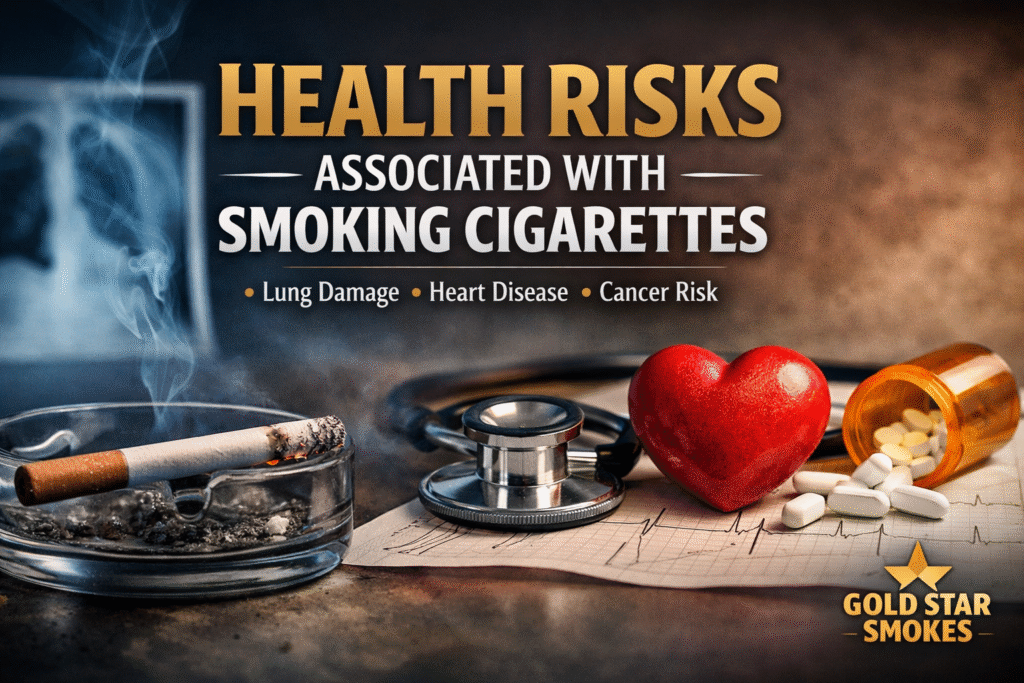
Cigarette smoking is linked to a range of short-term and long-term health risks that affect the lungs, heart, and overall well-being. While adults choose to smoke for different reasons, understanding these risks helps individuals make informed decisions. In Canada, health authorities consistently highlight smoking as a leading cause of preventable illness and disease.
Why It Is Important to Understand Smoking Risks
Smoking is a personal choice for adults.
But it is not a risk-free one.
Understanding the health effects of cigarette smoking is not about judgment or pressure. It is about clarity. When people know what smoking does to the body, they can better weigh habits, frequency, and lifestyle choices.
This page focuses on factual, evidence-based health risks associated with smoking cigarettes, as outlined by Canadian health authorities and medical research.
Health Canada identifies smoking as one of the leading causes of preventable disease and death in Canada.
What Happens When You Smoke a Cigarette
Cigarette smoke contains thousands of chemicals.
Many of these substances are harmful when inhaled into the lungs.
When smoke is inhaled:
• Chemicals enter the lungs
• Oxygen exchange becomes less efficient
• Toxins pass into the bloodstream
• Organs throughout the body are affected
Even occasional smoking introduces these substances into the body.
Over time, repeated exposure increases health risks.
Short-Term Health Effects of Smoking
Some effects of smoking appear quickly, even in people who do not smoke daily.
Common short-term effects include:
• Increased heart rate
• Elevated blood pressure
• Reduced lung capacity
• Shortness of breath
• Coughing and throat irritation
• Reduced sense of taste and smell
These effects may feel mild at first, but they reflect how the body reacts to smoke exposure
How Smoking Affects the Lungs
The lungs are the first organs affected by cigarette smoke.
Smoking damages the tiny air sacs responsible for oxygen exchange. Over time, this damage reduces lung efficiency and elasticity.
Possible lung-related effects include:
• Chronic coughing
• Mucus buildup
• Reduced breathing capacity
• Increased susceptibility to infections
Long-term smokers are at significantly higher risk of chronic respiratory conditions.
Long-Term Health Risks Linked to Smoking
Long-term cigarette smoking is associated with serious health conditions.
Medical research consistently links smoking to:
• Lung cancer
• Chronic obstructive pulmonary disease (COPD)
• Heart disease
• Stroke
• Peripheral vascular disease
The risk increases with duration and frequency of smoking.
Government of Canada reports that smoking remains a major contributor to chronic illness nationwide.
Smoking and Heart Health
Smoking places strain on the cardiovascular system.
Nicotine and other chemicals:
• Narrow blood vessels
• Increase blood pressure
• Raise heart rate
• Reduce oxygen delivery to the heart
These effects increase the risk of heart attack and other cardiovascular complications over time.
Smoking and Cancer Risk
Cigarette smoking is strongly associated with multiple forms of cancer, not just lung cancer.
Cancers linked to smoking include:
• Lung
• Throat
• Mouth
• Esophagus
• Bladder
• Pancreas
Risk levels vary based on smoking patterns, genetics, and overall health.
Second-Hand Smoke and Health Risks
Smoking does not only affect the person holding the cigarette.
Second-hand smoke is created when smoke from a burning cigarette mixes with smoke exhaled by the smoker. This smoke contains many of the same harmful chemicals.
Health concerns linked to second-hand smoke exposure include:
• Increased risk of respiratory infections
• Worsening of asthma symptoms
• Higher risk of heart disease in non-smokers
• Increased risk for children exposed indoors
Because of these risks, smoking is restricted or prohibited in many indoor and shared spaces across Canada.
Health Canada recognizes second-hand smoke as a significant public health concern, particularly for children and vulnerable individuals.
Does Smoking Less Reduce Health Risks?
Smoking fewer cigarettes may reduce exposure, but it does not eliminate health risks.
Even low or occasional smoking introduces harmful substances into the body. There is no completely risk-free level of cigarette smoking.
Key points to understand:
• Fewer cigarettes means lower exposure, not zero risk
• Long-term effects can still develop over time
• Individual health outcomes vary
Risk depends on frequency, duration, genetics, and overall health.
Are “Light” or “Low Tar” Cigarettes Safer?
No.
Terms like “light,” “mild,” or “low tar” do not mean safer. These products still deliver nicotine and harmful chemicals.
Research has shown that smokers often inhale more deeply or smoke more frequently when using lighter cigarettes, which can offset any perceived reduction.
This is why marketing terms that imply reduced harm are restricted in Canada.
Government of Canada prohibits misleading claims that suggest some cigarettes are safer than others.
Smoking, Nicotine, and Dependence
Nicotine is the primary addictive substance in cigarettes.
It affects the brain by releasing dopamine, which reinforces repeated use. Over time, this can lead to physical and psychological dependence.
Dependence can make quitting difficult, even for people who want to stop or reduce smoking.
Understanding nicotine dependence helps explain why smoking patterns can persist despite known risks.
Smoking and Overall Lifestyle Factors
Health outcomes are influenced by more than smoking alone.
Factors that interact with smoking risks include:
• Diet and nutrition
• Physical activity
• Alcohol consumption
• Stress levels
• Access to healthcare
Some people experience more severe effects than others due to these combined factors.
Smoking Awareness and Personal Choice
Smoking is a legal activity for adults in Canada. Many people choose to smoke despite understanding the risks.
This page is not intended to judge or persuade. It exists to provide clear, accurate information so adults can make informed decisions.
Being informed allows individuals to:
• Understand potential long-term impacts
• Monitor their health more closely
• Make changes if and when they choose
Services to help you quit smoking in every province:
- Ontario (Smoker’s Help Line)
- British Columbia (Quit Now)
- Alberta (Alberta Quits)
- Manitoba (Smoker’s Help Line)
- Saskatchewan (Smoker’s Help Line)
- Nova Scotia (Tobacco Free Nova Scotia)
- New Brunswick (Smoke Free NB)
- Newfoundland and Labrador (Smoker’s Help)
- Prince Edward Island (Smoker’s Help Line)
- Northwest Territories (NT Health & Social services)
Why Retailers Share Health Information
Responsible tobacco retailers in Canada are expected to provide transparent, factual information.
Sharing health risk information:
• Supports informed decision-making
• Aligns with federal compliance expectations
• Builds consumer trust
• Reduces misinformation
Providing education does not promote smoking. It promotes awareness. Clear information benefits everyone. It supports transparency, compliance, and trust.
Frequently Asked Questions
Is smoking still legal in Canada?
Yes. Smoking is legal for adults, with restrictions on where smoking is allowed.
Are health risks the same for everyone?
No. Risk varies based on genetics, smoking habits, and overall health.
Does quitting reduce health risks?
Yes. Many health risks decline over time after quitting, though timelines vary.
Why do some people smoke despite the risks?
Smoking behavior is influenced by nicotine dependence, stress, habit, and personal choice.
Research-Based Citations for Health Risks Associated with Smoking Cigarettes
| # | Citation | Key Focus | URL |
|---|---|---|---|
| 1 | Health Canada (2024). Smoking in Canada: What we know. | Authoritative overview of the health impacts of smoking and tobacco use, supporting its status as a leading cause of preventable disease in Canada. | Link |
| 2 | Schane, R. E., et al. (2010). Health effects of light and intermittent smoking: a review. | A critical review published in Circulation demonstrating that light and intermittent smoking pose substantial risks for cardiovascular and respiratory diseases. | Link |
| 3 | Duan, K. I., et al. (2026). Early Impacts of Individual Cigarette Health Warnings in Canada. | Recent research in the European Respiratory Journal evaluating the effectiveness of Canada’s latest health warning strategies on individual cigarettes. | Link |
| 4 | Rahman, M., et al. (2025). Cardiovascular Effects of Smoking and Smoking Cessation. | Technical study detailing how smoking narrows blood vessels and increases heart rate, while highlighting the benefits of cessation for heart health. | Link |
| 5 | National Cancer Institute (2001). Risks Associated with Smoking Cigarettes with Low Machine-Measured Yields of Tar and Nicotine. | Foundational research (Monograph 13) proving that “light” or “low-tar” cigarettes do not reduce the risk of disease for smokers. | Link |
| 6 | Corsi, D. R., et al. (2025). Impact of smoking from childhood associated with greater cardiovascular risk. | Research published in Women’s Health Issues exploring the long-term cardiovascular consequences of smoking patterns and duration. | Link |
| 7 | Shiffman, S., et al. (2011). Cessation Among Smokers of “Light” Cigarettes. | Study in the American Journal of Public Health showing that “light” cigarettes deliver comparable amounts of toxins due to compensatory smoking behaviors. | Link |