🎁 FREE EXPRESS SHIPPING 5550+ Orders Shipped Canada Wide 💎 COLLECT POINTS ON EACH PURCHASESame-day dispatch before 4 PM ET 🎁REFER A FRIEND AND EARN CASH ⭐⭐⭐⭐⭐ 5 star rated 🎁SAVE MONEY ON CARTONS


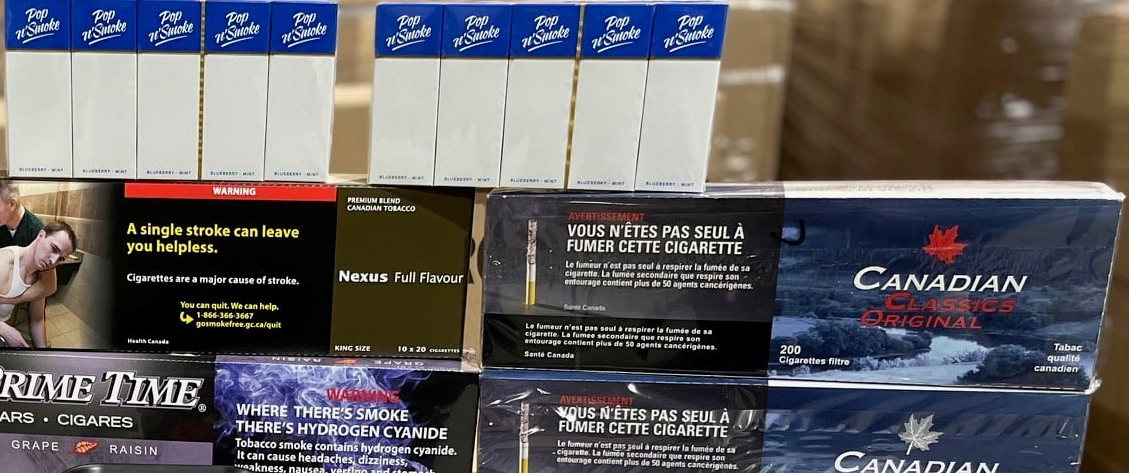

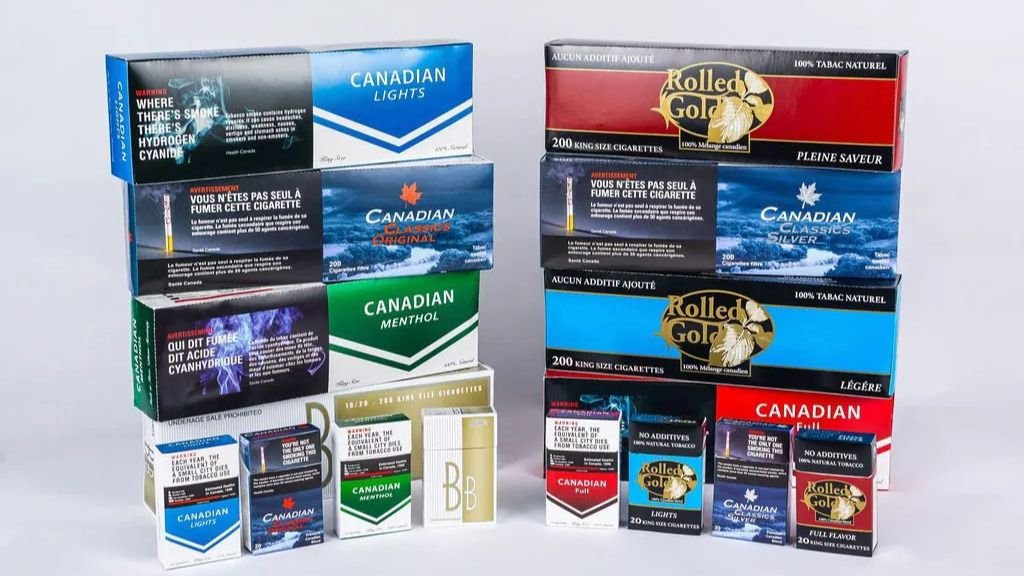
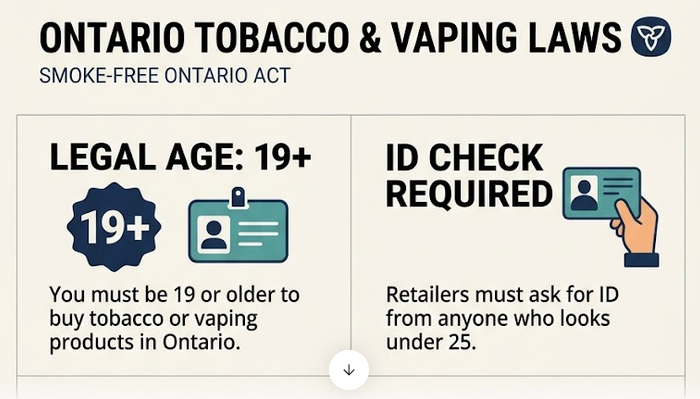

Learn Ontario tobacco laws in 2026, including the legal smoking age, cigarette sales, online orders, tobacco taxes, ID requirements and delivery restrictions.
Dont go for cheap native cigarettes that are sold online
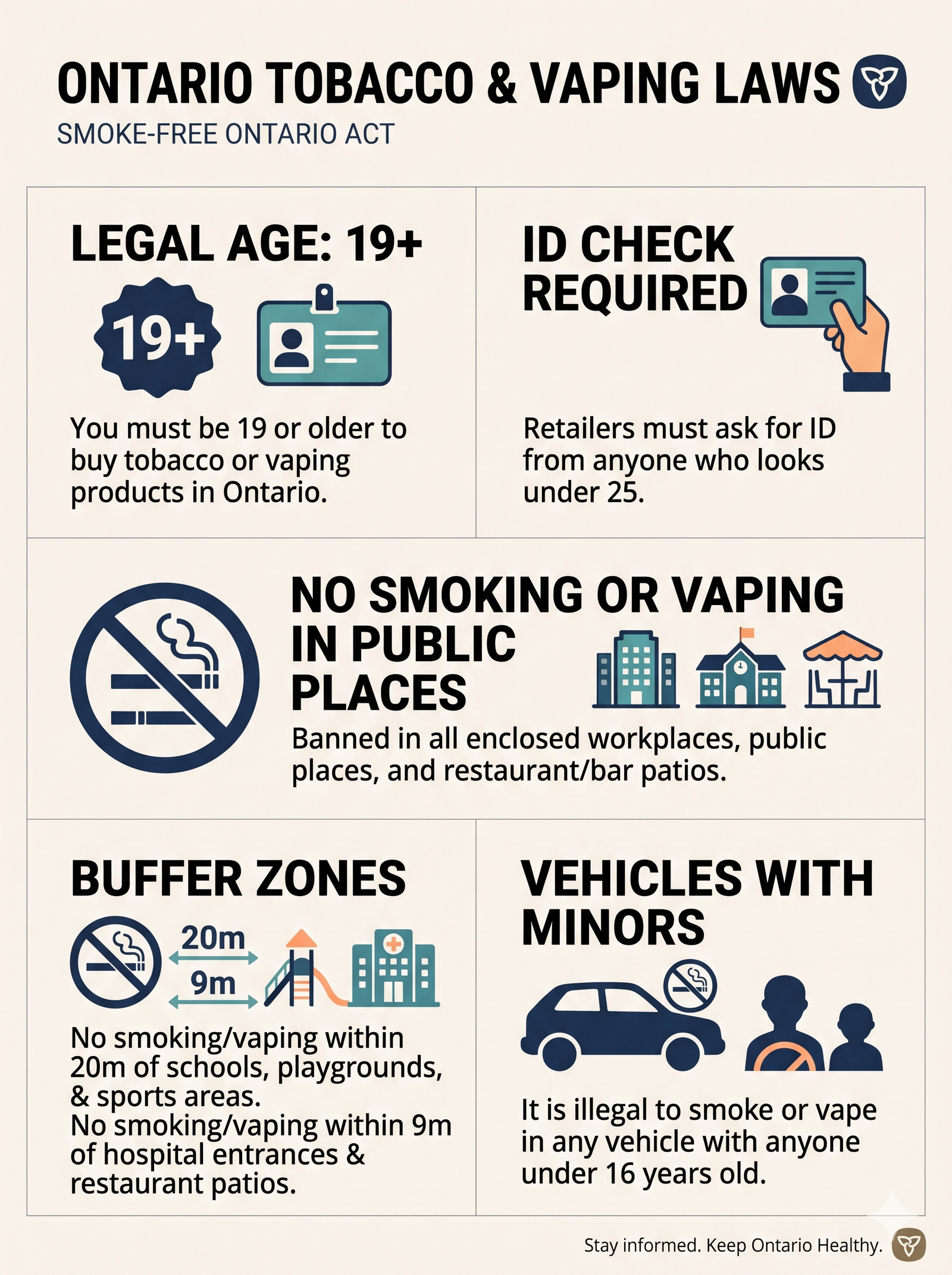
Ontario tobacco laws in 2026 require consumers to be at least 19 years old to purchase cigarettes. Sellers must request acceptable identification from anyone who appears younger than 25. The Smoke-Free Ontario Act, 2017 regulates tobacco sales and smoking restrictions, while the Tobacco Tax Act governs provincial taxation, retail permits and cigarette tax stamps. Additional federal requirements apply to packaging, excise duty and certain tobacco shipments.
Buying native cigarettes online in Ontario involve further conditions, including authorized distribution, applicable tax exemptions and age verification.
These requirements apply across Ontario, including Toronto, Mississauga, Brampton, Ottawa and other municipalities. The province also regulates tobacco retailers and tax compliance, while federal legislation governs additional areas such as tobacco packaging, promotion and interprovincial distribution.
For consumers researching cigarette purchases or delivery, the distinction between age verification, legal tobacco products and shipping restrictions is especially important. Each involves different legal obligations.
| Requirement | Ontario law in 2026 |
|---|---|
| Minimum age to buy cigarettes | 19 years |
| Identification requirement | Required when a purchaser appears under 25 |
| Retail tobacco permit | Required for ordinary tobacco retail dealers |
| Cigarette tax | 18.475 cents per cigarette |
| Online tobacco purchases | Subject to applicable sales, tax and distribution laws |
| Interprovincial tobacco mailing | Restricted under federal rules |
| Smoking in enclosed public places | Generally prohibited |
| First Nations tobacco tax exemptions | Available only under specified legal conditions |
These requirements come from Ontario’s tobacco legislation, provincial tax rules and federal tobacco regulations. Specific exemptions and additional restrictions may apply.
Gov References
| sources | |
|---|---|
| Smoke-Free Ontario Act, 2017 | Age, sales, retail rules and smoking restrictions |
| Ontario retailer guidance | ID requirements, store operations and display restrictions |
| Ontario tobacco tax guidance | Tax rates, stamps, provincial requirements |
| First Nations Cigarette Allocation System | On-reserve tax exemption and eligibility |
| Ontario smoking restrictions | Public places and designated smoke-free areas |
| Health Canada tobacco regulations | Federal packaging, labelling and tobacco regulation |
Three major legal frameworks govern tobacco products in Ontario: the Smoke-Free Ontario Act, 2017, the Tobacco Tax Act, and Canada’s Tobacco and Vaping Products Act. Each addresses different aspects of tobacco regulation.
The Smoke-Free Ontario Act governs age restrictions, tobacco sales, retail displays, promotion and smoking in public places. The Tobacco Tax Act establishes provincial tax obligations, tobacco permits and controls on the sale of tax-paid products. Federal tobacco legislation adds requirements concerning packaging, advertising, promotion and certain shipping activities.
A retailer must comply with all applicable laws. Meeting the minimum-age requirement, for example, does not remove tobacco tax obligations or permit requirements.
These laws apply throughout Ontario. Municipalities may also impose additional restrictions, particularly on smoking in public spaces.
Responsibility is divided among several authorities:
Understanding these responsibilities helps consumers and businesses find the correct authority when questions involve sales, cigarette taxation, tobacco identification stamps or smoking restrictions.
The legal age to purchase cigarettes or other tobacco products in Ontario is 19. Section 3 of the Smoke-Free Ontario Act, 2017 prohibits selling or supplying tobacco to anyone younger than 19.
Ordering native cigarettes online in Ontario involves several legal requirements, including the purchaser’s age, the seller’s authorization, applicable tobacco taxes and the method of delivery.
Ontario generally requires tobacco retailers to hold a valid retail dealer’s permit and sell tobacco obtained through authorized supply channels. Products sold to ordinary taxable consumers must also meet provincial tax-stamping requirements.
Canada Post generally prohibits tobacco shipments between provinces and territories unless a specified exception applies. Its rules identify shipments between manufacturers or retailers, between two consumers, and shipments otherwise expressly permitted by federal law.
Proof-of-age delivery helps verify a recipient’s eligibility. It does not independently establish that the seller, product, transaction or shipment meets every applicable legal requirement.
Consumers should verify the applicable provincial and federal requirements before relying on an online seller’s claims of compliance.
Ontario law requires sellers to request identification from customers who appear younger than 25 before supplying tobacco products.
This does not mean the legal purchasing age is 25. It is an age-verification safeguard designed to help prevent sales to people under 19.
The identification must include a photograph and date of birth and reasonably appear to have been issued by a government or the Liquor Control Board of Ontario.
Examples of acceptable identification include:
A retailer must be satisfied that the identification establishes the purchaser’s age. Customers cannot use identification unlawfully issued to someone else.
Buying cigarettes online in Ontario is subject to provincial tobacco sales laws, taxation requirements and applicable federal shipping restrictions. An online order is not automatically lawful simply because the purchaser is over 19 or the parcel requires identification upon delivery.
Ontario tobacco retailers generally need a valid Tobacco Retail Dealer’s Permit and must comply with rules concerning legal tobacco products, authorized suppliers and provincial tobacco tax. Online transactions remain subject to applicable age and sales restrictions.
Shipping introduces another legal consideration. Canada Post restricts tobacco shipments between provinces or territories, with exceptions for certain manufacturer-to-retailer, retailer-to-retailer and consumer-to-consumer shipments, as well as shipments expressly permitted by federal law.
Consumers should distinguish a permitted tobacco sale from a permitted method of transportation. Both must comply with the applicable laws.
Tobacco delivery may involve identity checks at purchase and at the point of handover. Ontario’s minimum tobacco purchasing age is 19, and Canada Post generally requires proof of age for tobacco shipments unless a specified exception applies.
For Canada Post parcels requiring proof of age, delivery personnel visually assess the recipient. If the person appears younger than 30, photo identification is requested to confirm the required age.
Canada Post also records the recipient’s name and signature when its proof-of-age service applies. An authorized adult other than the named addressee may be able to accept a parcel when the applicable conditions are met.
For more information, see our guide on whether someone else can accept a cigarette delivery in Canada.
Age verification establishes whether an individual meets the delivery service’s age requirement. It does not independently confirm that the tobacco was lawfully sold, taxed or shipped.
Canada Post generally prohibits tobacco products from being mailed between provinces or territories unless a specified exception applies.
Its published rules recognize certain shipments between manufacturers or retailers, shipments between two consumers, and shipments otherwise expressly permitted by federal law.
A commercial retailer sending cigarettes directly to an Ontario consumer cannot assume that adding a proof-of-age service makes an interprovincial parcel permissible.
Ontario’s Tobacco Tax Act also imposes obligations concerning tobacco products purchased or received for consumption in the province.
Anyone arranging interprovincial tobacco shipments should verify the applicable federal mailing rules, provincial tax treatment and retailer requirements before sending the products.
Ontario’s provincial tobacco tax is 18.475 cents per cigarette as of October 2026. This equals approximately $3.70 for a pack of 20 cigarettes and $36.95 for a carton containing 200 cigarettes.
The Ontario Ministry of Finance administers this tax under the Tobacco Tax Act. Consumers who purchase or receive tobacco products for personal consumption are generally responsible for the applicable provincial tobacco tax.
Cigarette prices also reflect federal excise duty, the Harmonized Sales Tax (HST), and other costs throughout the supply chain. These different charges help explain why the retail price of a cigarette package is considerably higher than its provincial tobacco tax alone.
The following table shows the provincial tobacco tax for common cigarette package quantities.
| Cigarette quantity | Ontario tobacco tax |
|---|---|
| 20 cigarettes | $3.70 |
| 25 cigarettes | $4.62 |
| 200 cigarettes (carton) | $36.95 |
Amounts are calculated using Ontario’s published rate of $0.18475 per cigarette and rounded to the nearest cent. They exclude federal excise duty, HST and other costs.
These figures represent the provincial tax component, not the total retail price.
For a closer look at how taxes affect consumer prices, see our guide to cigarette costs in Ontario.
Canada imposes a separate federal excise duty on cigarettes under the Excise Act, 2001.
Effective April 1, 2026, the federal excise duty on cigarettes is $0.97299 per five cigarettes, or fraction of five, in a package. This works out to approximately $3.89 for a standard pack of 20 cigarettes and $38.92 for a carton containing 200 cigarettes.
Ontario also applies the 13% HST to taxable cigarette sales. Federal excise duty and provincial tobacco tax are generally reflected in the selling price before HST is calculated.
For example, a pack of 20 cigarettes carries approximately:
The final shelf price also reflects manufacturing, distribution, retail margins and other applicable costs.
Federal excise duty rates are adjusted periodically, so consumers comparing prices across years should check the effective date of the rate.
Cigarette packages sold through Ontario’s ordinary tax-paid retail market generally carry a yellow Ontario-adapted federal tobacco stamp.
This stamp includes the provincial identifier “ON” and indicates that Ontario tobacco tax has been accounted for on the package. It helps tax inspectors identify products distributed through the province’s regulated tobacco supply chain.
Cigarettes without the required Ontario stamp may be considered unmarked tobacco and can trigger enforcement action, depending on the circumstances and applicable exemptions.
A peach-coloured federal tobacco stamp does not independently establish that cigarettes may be sold to every Ontario consumer. Ontario’s First Nations Cigarette Allocation System permits specified tax-exempt purchases through authorized on-reserve retailers. Other recognized channels, including certain duty-free and diplomatic transactions, follow separate rules.
Products distributed outside the conditions of their applicable exemption may be unlawful. The appropriate tax treatment depends on the purchaser, the authorized distribution channel and the circumstances of the transaction.
Official sources: Ontario Tobacco Tax and CRA Excise Duty Rates.
First Nations cigarettes are not automatically exempt from Ontario tobacco tax. Tax treatment depends on the purchaser’s eligibility, where the transaction occurs, and whether the cigarettes are distributed through an authorized system.
Ontario recognizes a specific tax exemption through the First Nations Cigarette Allocation System, established under the Tobacco Tax Act and Ontario Regulation 649/93.
The system allows eligible First Nations individuals to purchase allocation cigarettes on a reserve for their exclusive use without paying Ontario’s provincial tobacco tax.
The exemption operates within a regulated supply chain involving ministry-authorized wholesalers, approved on-reserve retailers and annual cigarette allocations.
The fact that cigarettes are manufactured by an Indigenous-owned business, marketed as Native cigarettes or purchased near a First Nations community does not independently establish eligibility for the provincial tax exemption.
Under Ontario’s allocation system, eligible purchasers are First Nations individuals who meet the applicable definition under the federal Indian Act.
The province identifies documents such as the Secure Certificate of Indian Status, Certificate of Indian Status and Temporary Confirmation of Registration Document as evidence of eligibility.
The system has several important conditions:
These requirements determine whether the provincial tobacco tax exemption applies.
A purchase made by someone who does not qualify under the allocation rules cannot rely on the same exemption merely because the transaction involves an on-reserve seller.
Ontario distinguishes ordinary tax-paid cigarettes from allocation cigarettes partly through the markings on their packages.
| Stamp characteristic | Yellow Ontario stamp | Peach-coloured federal stamp |
|---|---|---|
| Primary purpose | Indicates Ontario tobacco tax has been accounted for | Identifies a different federal stamping category, including allocation cigarettes |
| Ontario tobacco tax | Accounted for | Not accounted for on allocation cigarettes |
| Typical distribution | Ordinary Ontario tax-paid retail supply | Specified exempt or special distribution channels |
| Retail restrictions | Applicable retail and tax laws | Additional eligibility and distribution conditions |
Peach-coloured stamps may also appear on cigarettes in other legally recognized circumstances, such as certain diplomatic or duty-free transactions.
The Ontario Ministry of Finance specifically warns that some peach-stamped cigarettes are illegal when distributed outside the requirements of the allocation system.
A stamp colour must therefore be interpreted alongside the product’s source, purchaser eligibility and distribution circumstances.
Cigarettes obtained through Ontario’s First Nations allocation system are intended for eligible purchasers buying them on a reserve for their exclusive use.
The system does not provide a general authorization for retailers to acquire tax-exempt allocation cigarettes and resell them to the broader Ontario market.
Ontario requires authorized wholesalers to deliver allocation cigarettes to approved on-reserve retailers within assigned quantities. Those retailers must sell the products only to eligible First Nations purchasers under the program’s conditions.
Distributing allocation cigarettes outside these requirements can result in the products being treated as illegal tobacco, with potential seizure, penalties and fines.
For residents of Toronto, Mississauga and other Ontario communities, the same provincial rules govern the tax treatment of cigarettes, subject to any applicable statutory exemptions.

In stock

In stock

In stock
In stock
In stock
In stock
In stock
In stock
In stock
Ontario tobacco retailers must generally hold a valid Tobacco Retail Dealer’s Permit, purchase products from registered wholesalers, follow age-verification rules and comply with provincial tobacco tax requirements.
The Ontario Ministry of Finance administers retailer permits under the Tobacco Tax Act, while the Smoke-Free Ontario Act, 2017 establishes additional rules for selling, displaying and promoting tobacco products.
These obligations apply to ordinary retail tobacco businesses throughout the province, including stores operating in Toronto, Mississauga, Brampton and Ottawa.
Retailers must also keep accurate purchase and sales records, display the required health warning and age-restriction signs, and ensure products meet applicable packaging and marking requirements.
Some specialized retailers, including authorized reserve retailers and registered tobacconists, operate under additional or modified requirements.
Yes. Businesses selling tobacco products directly to consumers generally need a valid Tobacco Retail Dealer’s Permit issued by Ontario’s Ministry of Finance.
A separate permit is required for each retail location, and the permit must belong to the owner of the tobacco products being sold.
Retailers must purchase tobacco products from Ontario-registered wholesalers and maintain records that demonstrate compliance with applicable tax obligations.
Under the Tobacco Tax Act, relevant purchase and sales records generally must be retained for seven years following the end of the fiscal year to which they relate, unless the ministry authorizes earlier disposal.
Authorized reserve retailers under Ontario’s First Nations Cigarette Allocation System are deemed to hold a retail dealer’s permit and are subject to the program’s separate authorization requirements.
Operating without the required permit or violating its conditions can lead to financial penalties and enforcement action.
Ontario generally prohibits tobacco retailers from displaying tobacco products where customers can see or handle them before purchase.
Section 4 of the Smoke-Free Ontario Act, 2017 also restricts tobacco promotion in retail establishments and promotional material visible from outside a store.
Retailers must keep tobacco products out of public view and follow the rules governing permitted informational signs and price lists.
Certain registered tobacconists may qualify for limited exemptions involving specialty tobacco products when they meet specific registration, inventory, access and display conditions.
Ordinary convenience stores cannot assume those exceptions apply to them.
Retailers must also display the prescribed tobacco health warning and identification signs. Failing to comply with age-verification, signage or display requirements can lead to charges or other enforcement measures.
Menthol cigarettes are subject to a federal prohibition introduced in Canada in 2017, building on earlier restrictions covering other characterizing flavours in cigarettes.
The federal Tobacco and Vaping Products Act and related rules restrict certain flavouring additives in cigarettes and other specified tobacco products.
Ontario retailers must comply with these federal restrictions in addition to provincial tobacco sales laws.
Flavour regulations differ by product category. Cigarettes, cigars, vaping products and other tobacco-related products are not necessarily subject to identical requirements.
For that reason, the rules governing menthol-flavoured vaping products should not be confused with those governing menthol cigarettes.
Consumers and retailers should consult the current federal requirements when determining whether a particular flavoured tobacco product may legally be sold.
In stock
In stock
In stock
In stock
In stock

In stock
In stock

In stock

In stock
Ontario prohibits smoking tobacco in enclosed workplaces, enclosed public places, schools, playgrounds and several designated outdoor areas. These restrictions are established under the Smoke-Free Ontario Act, 2017 and its regulations.
The law protects people from exposure to second-hand smoke in locations such as restaurants, offices, public buildings, recreational facilities and health care environments. Many restrictions also apply to vaping products and cannabis, although specific rules may differ.
Some outdoor restrictions extend beyond the property itself. For example, smoking is prohibited within designated distances of school grounds, playgrounds, restaurant patios and certain health care facilities.
These province-wide rules apply in Toronto, Mississauga, Brampton, Ottawa and other Ontario municipalities. Local bylaws and property rules may introduce additional restrictions.
Smoking is prohibited on restaurant and bar patios in Ontario, including public areas within nine metres of the patio.
This restriction applies to tobacco smoking and vaping, with a narrow historical exception for certain veterans’ organization patios that meet specific conditions.
Ontario also prohibits smoking within nine metres of entrances and exits at specified health care facilities, including hospitals and long-term care homes. Outdoor hospital grounds are smoke-free as well.
However, the province does not impose one universal nine-metre rule around every building entrance. Restrictions depend on the type of property, designated smoke-free area, and any applicable municipal bylaws.
For example, smoking near a restaurant patio may violate provincial law even when the person is standing on a public sidewalk within the restricted area.
Ontario establishes additional smoke-free zones around places where children, patients and other vulnerable people may be present.
| Location | Smoking restriction |
|---|---|
| Public and private schools | Indoor areas, school grounds and public areas within 20 metres of school grounds |
| Children’s playgrounds | Playground areas and surrounding public areas within 20 metres |
| Publicly owned sports areas | Sporting areas, spectator areas and surrounding public areas within 20 metres, subject to exclusions |
| Restaurant and bar patios | Patios and surrounding public areas within nine metres |
| Hospitals | Outdoor hospital grounds and specified areas within nine metres of entrances or exits |
| Child care centres | Entire premises, including designated outdoor areas |
| Enclosed workplaces | Smoking prohibited, subject to applicable statutory exceptions |
Publicly owned sporting areas include certain municipal, provincial and post-secondary institution facilities. Golf courses are excluded from the specific sporting-area restriction.
Smoking restrictions also apply to the outdoor grounds of community recreational facilities and public areas within 20 metres of those grounds.
These distances should be measured according to the applicable legal boundaries rather than assuming that every nearby outdoor space is unrestricted.
Ontario prohibits smoking tobacco or vaping in a motor vehicle when another person under 16 years old is present.
The restriction applies whether the person smoking is the driver or a passenger. It is intended to protect children from exposure to smoke and vapour in enclosed vehicles.
For residential properties, the rules are different.
The Smoke-Free Ontario Act prohibits smoking in indoor common areas of apartment buildings, condominiums and college or university residences. Examples include shared hallways, elevators, laundry rooms, parking garages, lobbies and recreational facilities.
Smoking inside a private residential unit is not subject to a blanket provincial prohibition under this Act. However, condominium rules, tenancy agreements, building policies and applicable laws may restrict smoking in individual units, balconies or other spaces.
Tenants and condominium residents should review their building’s policies and any applicable municipal requirements.
Penalties for violating Ontario tobacco laws depend on the specific offence. Illegal tobacco sales, smoking in prohibited places, failure to verify age and possession of unmarked cigarettes are governed by different provisions.
Under the Smoke-Free Ontario Act, 2017, individuals who smoke or vape where prohibited may face fines of up to $1,000 for a first offence and $5,000 for subsequent offences upon conviction.
Retailers who sell tobacco to minors or fail to follow identification requirements may also face charges. Separate consequences can apply under the Tobacco Tax Act when cigarettes are sold, distributed or possessed without the required provincial tax markings or authorization.
Because court-imposed fines, ticket set fines and administrative tax penalties differ, the amount payable depends on the legal process and circumstances.
Selling or supplying tobacco to someone under 19 violates section 3 of the Smoke-Free Ontario Act, 2017.
Ontario’s provincial offences schedule lists a $400 set fine for selling or supplying tobacco to a person younger than 19. It also lists a $400 set fine for selling or supplying tobacco to someone who appears younger than 25 without satisfying the applicable identification requirement.
These are published ticket set-fine amounts. They should not be confused with every potential financial consequence following prosecution.
Retail businesses may also face enforcement measures under the Tobacco Tax Act or other applicable legislation, depending on the circumstances and history of violations.
Retailers should maintain appropriate age-verification procedures, train employees and refuse sales when the legal requirements are not satisfied.
Ontario’s Tobacco Tax Act restricts the possession, sale and distribution of unmarked cigarettes unless an applicable authorization or exemption exists.
Unmarked cigarettes generally include packages that lack the Ontario-adapted federal tobacco stamp required for ordinary provincial tax-paid sales.
For certain possession offences involving unmarked cigarettes, Ontario publishes the following penalties:
| Number of unmarked cigarettes | Statutory fine |
|---|---|
| 200 or fewer | $200, plus an additional fine of up to three times the applicable tobacco tax |
| 201–1,000 | $500, plus an additional fine of up to three times the applicable tobacco tax |
| 1,001–10,000 | $1,000, plus an additional fine of up to three times the applicable tobacco tax |
| More than 10,000 | $1,000–$50,000, plus an additional fine of up to four times the applicable tobacco tax |
These are offence-specific penalties under the Tobacco Tax Act. Separate civil assessments, seizure provisions, repeat-offence consequences and statutory exemptions may apply.
For some repeat convictions or possession offences involving more than 10,000 unmarked cigarettes, imprisonment of up to two years is also possible.
Ontario’s Ministry of Finance may seize and forfeit unlawfully held tobacco products, and retailers can face additional penalties during tax inspections.
The absence of an ordinary Ontario tax stamp should be assessed alongside any legally applicable First Nations, diplomatic, duty-free or other recognized exemption.
Ontario residents often have practical questions that cross several areas of tobacco regulation, particularly when purchasing cigarettes online, travelling between provinces, or comparing products sold through different retail channels.
The following answers address common situations under the rules in effect as of October 2026.
No. You must be at least 19 years old to purchase cigarettes or other regulated tobacco products in Ontario.
Although 18 is the age of majority for certain legal purposes, Ontario’s minimum tobacco purchasing age is 19.
Retailers must request acceptable identification from customers who appear younger than 25 and confirm they meet the legal purchasing age.
A purchase from another province must comply with the laws governing the transaction, applicable provincial tobacco taxes and federal transportation restrictions.
Canada Post generally prohibits commercial retailer-to-consumer tobacco shipments between provinces unless a recognized legal exception applies.
An adult purchaser should not assume that a seller’s willingness to accept an online order makes the shipment legally permissible.
Cigarettes distributed through Ontario’s ordinary tax-paid retail market generally require the yellow Ontario-adapted federal tobacco stamp.
Special categories, including qualifying First Nations allocation cigarettes, operate under different rules.
A missing yellow Ontario stamp does not automatically establish that every possible possession is unlawful. The circumstances, product classification and applicable exemptions must be considered.
The Smoke-Free Ontario Act and provincial Tobacco Tax Act apply throughout Ontario.
Toronto, Mississauga, Brampton, Ottawa and other municipalities share these provincial requirements concerning tobacco purchasing age, retailer obligations and taxation.
However, municipal smoking bylaws may establish additional restrictions for parks, public spaces, municipal properties and other designated locations.
Residents can consult the relevant city for local rules or review additional information through the Gold Star Smokes Ontario page, including its Brampton and Ottawa pages.
In some permitted delivery arrangements, an eligible adult other than the named recipient may be able to receive the parcel, depending on the carrier’s requirements.
Canada Post requires proof of age for certain tobacco shipments and imposes restrictions on interprovincial mailing.
The recipient must satisfy the applicable age-verification procedure. A successful delivery does not independently establish that the original sale or shipment complied with every applicable law.
The most reliable sources are Ontario’s official legislation website, Ministry of Finance tobacco tax guidance, Ministry of Health smoking restrictions, and applicable federal regulations.
For tobacco packages, consumers should understand the significance of provincial tax markings and the limited exemptions governing specialized distribution channels.
For online purchases, the retailer’s legal status, tobacco taxation and delivery arrangements may all require consideration.
Because tax rates, retailer requirements and other regulations can change, always verify the current rules before relying on older articles or retailer statements.
Ontario tobacco laws establish a minimum purchasing age of 19, require age verification in specified circumstances, regulate retail tobacco sales and impose restrictions on where smoking is permitted.
The province also maintains tobacco taxation and product-marking requirements. First Nations tobacco exemptions, online purchases and interprovincial shipments involve additional conditions that should be evaluated independently.
Residents should rely on current provincial legislation, Ministry of Finance guidance and applicable federal regulations when making decisions about tobacco purchases, shipping or compliance.
Last reviewed: October 26, 2026.
This article provides general information about Ontario tobacco regulations and is not legal advice.
No account yet?
Create an AccountYou must be 19 years of age or older to view page. Please verify your age to enter.
Your access is restricted because of your age.