🎁 FREE EXPRESS SHIPPING 5550+ Orders Shipped Canada Wide 💎 COLLECT POINTS ON EACH PURCHASESame-day dispatch before 4 PM ET 🎁REFER A FRIEND AND EARN CASH ⭐⭐⭐⭐⭐ 5 star rated 🎁SAVE MONEY ON CARTONS









Cigarette strength is often described using terms such as light, medium, full flavour or strong. These descriptions usually refer to perceived smoke intensity, but they do not provide a reliable measurement of nicotine exposure or health risk.
For cigarettes manufactured by Indigenous and non-Indigenous companies, the same scientific distinction applies: nicotine content, machine-measured smoke yield and the amount of nicotine absorbed by a smoker are different measurements.
Filter ventilation, cigarette construction and smoking behaviour can all influence smoke exposure. Canada’s tobacco regulations also restrict promotional descriptions that could mislead consumers about cigarette strength or safety.
This guide explains what cigarette strength means, how nicotine and tar are measured, and why a lighter smoking sensation should not be interpreted as reduced harm.
Canadian Native cigarettes shoppers often fall into two groups. Some are switching from major commercial brands. Others are trying Indigenous brands for the first time. Both groups need clarity on what strength actually means before placing an order.
Canada Post confirms that tobacco shipments require proof of age and government-issued identification at delivery.
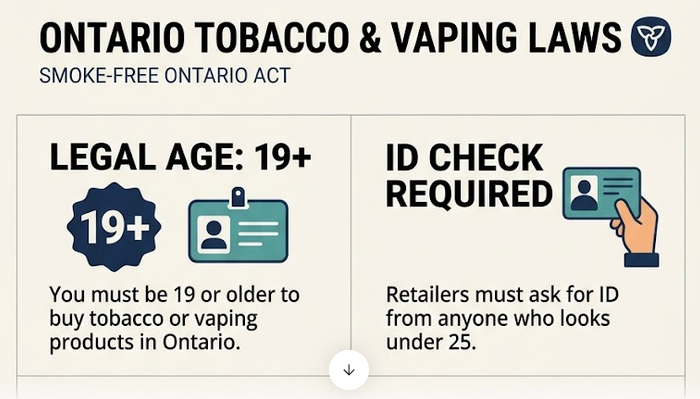
This article is intended for adults who meet the legal age in their province, which is 19 in Ontario and British Columbia and 18 in Alberta. Provincial requirements are published by provincial health authorities and enforced under provincial tobacco control legislation.
Now let’s clarify what “strength” actually refers to.
Cigarette strength is an informal description of perceived smoke intensity. It is not a standardized medical or scientific measurement.
The sensation associated with cigarette smoke may be influenced by nicotine, tobacco composition, cigarette construction, filter ventilation and individual smoking behaviour.
Three concepts are particularly important:
These quantities are related, but they are not interchangeable.
Health Canada uses laboratory methods to measure nicotine in tobacco and mainstream cigarette smoke.
Automated smoking machines follow standardized testing procedures. These tests support chemical analysis and regulatory monitoring.
However, machine measurements cannot accurately predict an individual’s exposure because people differ in how they smoke.
Health Canada regulates tobacco packaging and prohibits misleading descriptors such as “mild” or “low risk.”
Because of these restrictions, strength categories serve as experience-based guidance rather than medical classification.
Nicotine content varies by blend and design. Even when two products fall under “medium,” the perceived impact may differ due to tobacco cut and filter design.
Commercial multinational brands and Indigenous cigarette brands both follow federal compliance standards for packaging and labelling. However, blend formulation differs by manufacturer.
A smoker switching from a premium commercial brand should compare:
Matching previous experience reduces the risk of choosing a product that feels too harsh or too weak.
Some cigarette filters contain small ventilation openings that allow air to mix with smoke during machine testing.
Ventilation can reduce machine-measured smoke yields under certain conditions. Actual exposure may differ because smokers can change their puffing behaviour or obstruct ventilation openings.
A cigarette that feels less irritating may still deliver substantial nicotine and toxic chemicals.
In tobacco smoke analysis, tar generally refers to nicotine-free dry particulate matter collected during laboratory testing.
Tar is not a single chemical. It is a measurement of particulate material that remains after water and nicotine are excluded.
Cigarette smoke contains numerous harmful chemicals, and a lower machine-measured tar yield does not establish reduced health risk.
Throat irritation is a sensory response influenced by multiple smoke constituents and individual sensitivity.
It cannot reliably determine how much nicotine a cigarette contains or how much nicotine enters the bloodstream.
Source: Health Canada: Chemicals in Cigarettes
Many buyers searching to buy native cigarettes online in Canada are switching from well-known commercial labels.
If someone previously smoked a light commercial product, choosing light native cigarettes usually provides the smoothest transition. If someone previously smoked full-flavour premium brands, full strength native cigarettes Canada options may offer a more comparable experience.
However, strength perception is subjective. Individual tolerance, inhalation depth, and smoking frequency influence the overall sensation.
It is also important to state clearly that no strength category reduces health risk. All combustible cigarettes carry significant health consequences, and Health Canada provides cessation resources for individuals seeking to quit.
Understanding strength should guide purchasing decisions, not imply differences in safety.
Terms such as light, medium and full strength are commonly encountered in discussions about cigarette products. However, they do not establish standardized nicotine doses or reliable differences in health risk.
Canadian regulations specifically prohibit using the promotional terms “light” and “mild,” including variations such as “ultra-light” and “extra-mild,” for covered tobacco products.
| Description | Common interpretation | Scientific limitation |
|---|---|---|
| Light | Less intense perceived smoke sensation | Does not establish lower nicotine exposure or reduced harm |
| Medium | Intermediate perceived intensity | No universal nicotine-yield standard |
| Full or strong | More pronounced smoke sensation | Does not reliably quantify nicotine absorption |
Light native cigarettes Canada products are designed to deliver a smoother inhalation experience.
A light cigarette [Nexus Lights ]typically uses higher filter ventilation, which allows outside air to mix with smoke during inhalation. The result is a softer throat sensation and reduced smoke density perception.
Light strength is commonly chosen by:
Light strength does not mean lower health risk. It describes perceived intensity only.
Adult smokers searching best native cigarettes for beginners often fall into this category.
Light products are often preferred by budget-conscious smokers who want affordability without a harsh draw.
Medium strength represents the most common category in the Native Cigarettes Canada market.
A medium cigarette balances smoke density and throat impact. Filter ventilation is moderate, and tobacco packing is neither overly loose nor tightly compacted.
Medium strength is typically chosen by:
For many experienced smokers, medium strength becomes the “baseline” experience.
Medium category products often dominate sales volume because they appeal to the broadest audience.
Full strength native cigarettes Canada options provide the most pronounced throat sensation and densest smoke feel within the brand lineup.
Full strength typically features:
These products are commonly preferred by:
A full strength cigarette produces a stronger throat impact, which many long-term smokers associate with satisfaction.
Options includes – Canadian full – Nexus Full – Discount Full Flavoured
However, new buyers often make the mistake of choosing full strength too early. This can result in discomfort or dissatisfaction.
Again, strength classification does not imply safety differentiation. All combustible cigarettes remain subject to federal health warning requirements under the Tobacco and Vaping Products Act.
No. Cigarettes marketed historically as light or low-tar do not provide a proven reduction in smoking-related disease risk.
A person may compensate for diluted smoke by changing smoking behaviour, including taking larger or more frequent puffs.
The perceived smoothness of cigarette smoke is therefore an unreliable indicator of toxic exposure.
A full-strength label does not necessarily establish a specific nicotine content or absorbed nicotine dose.
A valid comparison would require laboratory measurements, clearly defined testing conditions and appropriate interpretation of how those measurements relate to human exposure.
Choosing the right strength becomes easier when you evaluate your own smoking habits.
Strength selection should reflect tolerance, frequency, and previous brand experience.
Here is a practical guideline for adult smokers in Canada.
If someone has never smoked regularly before, light strength is typically the most manageable starting point.
A lighter draw reduces harshness and makes the experience more controlled. Jumping directly to full strength often results in excessive throat irritation.
Recommended starting point: Light
An occasional smoker, meaning someone who smokes socially or infrequently, often prefers light or medium strength.
Light offers smoother inhalation. Medium offers slightly more body without becoming overpowering.
Recommended starting point: Light or Medium
A regular smoker who consumes cigarettes daily usually finds medium strength most balanced.
Medium provides enough throat presence without being overly intense.
Recommended starting point: Medium
Heavy smokers who previously used strong commercial brands may prefer full strength native cigarettes.
Switching to a lighter category may feel unsatisfying and lead to increased consumption frequency.
Recommended starting point: Full
If an adult smoker is transitioning to native from a well-known premium traditional brand, the safest strategy is to match the previous strength classification.
For example:
If previous brand was light → choose light native cigarettes
If previous brand was full flavour → choose medium or full depending on tolerance
Length also matters. King size cigarettes tend to feel slightly different due to burn rate and filter structure.
Strength selection may also be influenced by provincial shipping policies and inventory distribution.
Online tobacco purchases must comply with:
Ontario requires purchasers to be 19 or older under the Smoke-Free Ontario Act. Official source:
https://www.ontario.ca/page/smoke-free-ontario-act
British Columbia sets the minimum age at 19 under provincial tobacco control law. Official source:
Alberta sets the minimum legal age at 18. Official source:
Retailers selling online must ensure compliance with federal remote sales obligations, including instructing delivery services to verify identification.
These compliance factors affect purchase logistics, not strength differences, but they are important for adult buyers to understand before ordering.
Several misconceptions persist about nicotine levels, smoke intensity and tobacco product safety.
A smoother smoking sensation does not necessarily indicate lower nicotine content.
Smoke irritation can be influenced by filter ventilation, tobacco composition and individual sensitivity. These factors do not establish the amount of nicotine absorbed.
A stronger throat sensation may be associated with smoke characteristics, but it cannot serve as an accurate measurement of nicotine delivery.
Laboratory testing is required to quantify nicotine content or machine-measured yield.
No. Lower machine-measured tar yields have not established that low-tar cigarettes reduce smoking-related disease risk.
Cigarette smoke contains numerous toxic and carcinogenic substances regardless of the product’s perceived strength.
Packaging colour has historically been used to distinguish tobacco product variants. However, colours do not provide scientifically validated measurements of nicotine exposure.
Canadian tobacco packaging regulations restrict product appearance and presentation to reduce misleading promotional effects.
Cigarette filters can affect smoke composition under particular testing conditions. They do not eliminate the harmful chemicals produced by burning tobacco.
Cigarette strength descriptions are not standardized measurements of nicotine content, product quality or toxic exposure.
Two cigarette products described using similar strength-related terms may differ in tobacco composition, filter construction and laboratory-measured nicotine yield.
Likewise, differences in retail price do not establish meaningful differences in nicotine delivery or health risk.
No. Retail pricing does not provide a scientifically valid indication of tar, nicotine or other smoke constituents.
Actual chemical comparisons require laboratory testing under defined procedures.
Laboratory-measured nicotine yields can be compared when compatible methods and testing conditions are used.
However, those results must not be interpreted as precise measurements of the nicotine absorbed by an individual smoker.
Health Canada’s published cigarette chemical data explains these limitations and reports aggregate measurements rather than individual brand rankings.
The larger price difference usually appears between pack purchases and carton purchases.
Buying by the carton often reduces per-pack cost because shipping and distribution expenses are spread across higher volume.
For shoppers who already know their preferred strength, ordering cartons from a trusted native cigarettes online retailer in Canada can provide better value.
Canada regulates the promotion, packaging and labelling of tobacco products through federal legislation.
The Promotion of Tobacco Products and Accessories Regulations (Prohibited Terms) restrict the use of descriptors including “light” and “mild,” along with related variations, in specified tobacco advertising and promotional contexts.
These restrictions address the potential for consumers to interpret product descriptions as indications of reduced health risk.
Federal tobacco product requirements generally apply to cigarettes manufactured and marketed in Canada, including products made by Indigenous-owned businesses, subject to the applicable legal framework.
Indigenous ownership does not, by itself, establish that strength-related promotional claims are exempt from federal restrictions.
Official sources:
Perceived cigarette strength is influenced by tobacco composition, smoke characteristics, filter design and individual sensitivity. It is not a standardized measurement of nicotine exposure.
No. Light cigarettes have not been shown to reduce smoking-related disease risk. Their perceived smoothness does not establish lower toxic exposure.
Not necessarily. A full-strength designation does not provide an independently verified nicotine measurement. Actual comparisons require product-specific laboratory testing.
Nicotine content describes the nicotine present in tobacco. Nicotine yield describes the amount measured in cigarette smoke under specified testing conditions. Neither figure independently establishes the amount absorbed by a smoker.
Menthol can produce a cooling sensation that changes the perceived irritation of smoke. It does not necessarily lower nicotine delivery or health risks. Menthol additives in cigarettes marketed domestically have been prohibited in Canada since October 2017.
Filter design can affect machine-measured smoke yields, but actual nicotine exposure depends partly on smoking behaviour. Filtered cigarettes are not safe alternatives to other combustible cigarettes.
There is insufficient independently verified comparative evidence to establish that Indigenous-manufactured cigarettes, as a category, have higher or lower nicotine content than cigarettes manufactured by other companies.
Canada regulates tobacco product promotion, packaging and labelling. The promotional use of descriptors such as “light” and “mild” is restricted because they can create misleading impressions about product characteristics or safety.
No account yet?
Create an AccountYou must be 19 years of age or older to view page. Please verify your age to enter.
Your access is restricted because of your age.